
Before You Plan, Audit: A Guide to Smarter Academic Planning

As we approach the final stretch of this school year, many of us are balancing the push for a strong finish while also looking ahead to the next academic cycle. It’s that in-between time when the demands of the present are still very real, but the future is starting to knock at the door. This is exactly why now is the right moment to pause, reflect, and audit our academic programs before making big decisions about 2025-26.
At Valor Collegiate Academies, we’ve found that conducting an academic program audit allows us to move from assumptions to clarity. It’s easy to focus on isolated areas we know need improvement—but stepping back to see the whole system ensures that we’re addressing the right priorities in the right ways. Planning for the next school year without a full academic audit is like trying to solve a puzzle with missing pieces.
Why Audit Your Academic Program Now?
If we’re not intentional, planning for the next school year can default to tweaking what already exists rather than strategically shaping what will move the needle. That’s why this process starts not with solutions, but with reflection.
As Einstein put it, “If I had an hour to solve a problem, I'd spend 55 minutes thinking about the problem and five minutes thinking about solutions.” The lesson here is clear: the most impactful work happens when we take the time to assess before acting.
An academic program audit helps answer three core questions:
- What’s working well across our academic systems?
- What’s showing signs of strain or inconsistency?
- Where do we need more information before making key decisions?
Rather than making assumptions based on the loudest problems, this process helps surface patterns, strengths, and gaps across the full academic landscape. It also ensures that leadership teams are aligned before jumping into action.
Starting Out With a Systems Audit
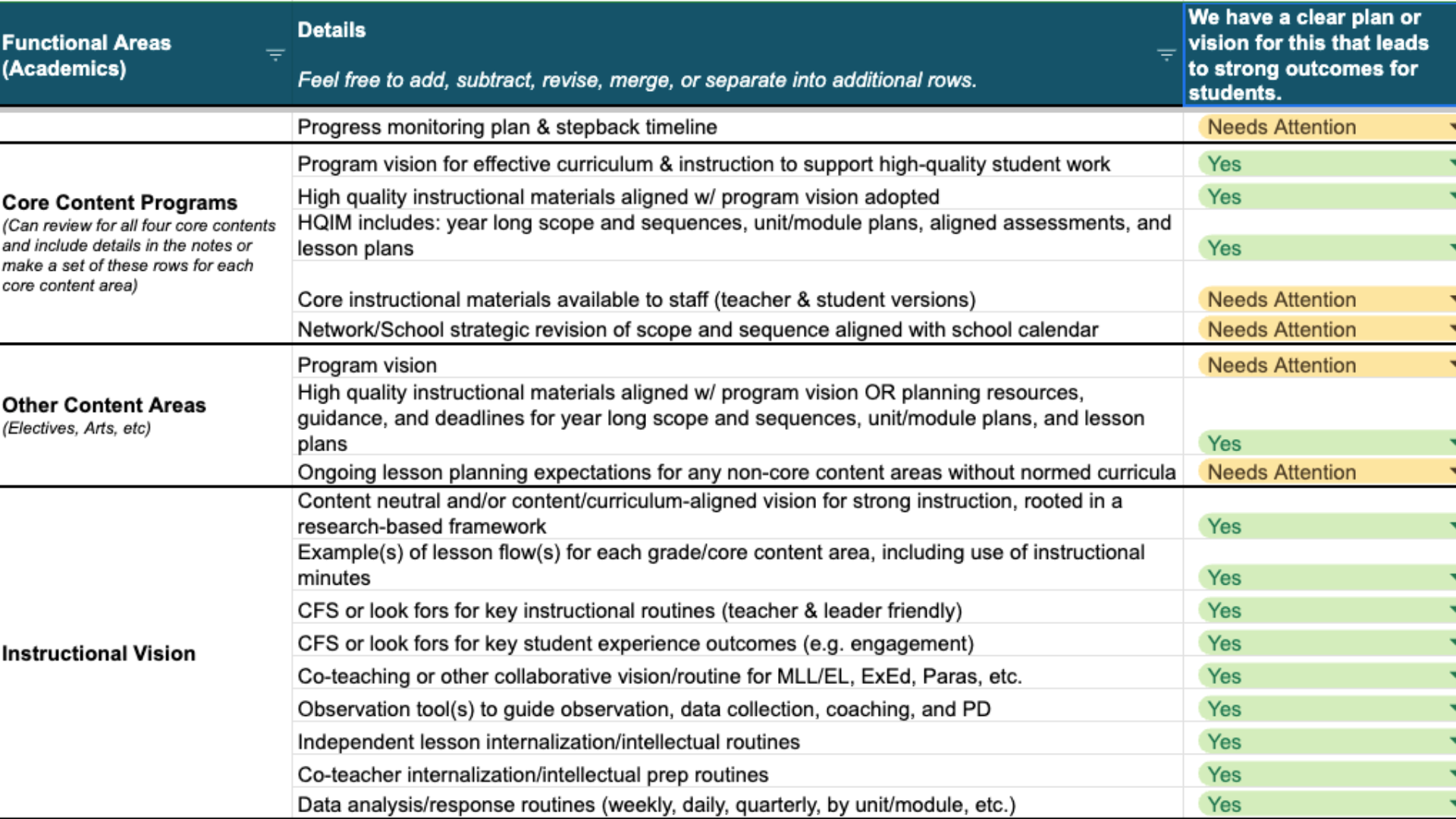
Snapshot of the Systems Section in the Academic Program Audit Tool.
The audit process we use is straightforward but incredibly effective. This step involves breaking down all the functional areas of the academic program—such as instructional vision, tiered support, and professional development—and evaluating them through two key lenses:
- Do we have a clear, effective plan or vision for this area?
- Do we have a clear, effective process for training stakeholders to use this well?
When I did this with my own team, the results were illuminating. Some areas were clear strengths—green across the board. Others, like our MTSS approach, had strong intentions but lacked fully developed processes. That realization pushed us to dig deeper and ensure we were backing up our vision with actual support structures.
You can grab the Academic Program Audit Tool in the Seminar Toolbox to guide your own assessment.
The Power of Pairing Systems Audits with Data
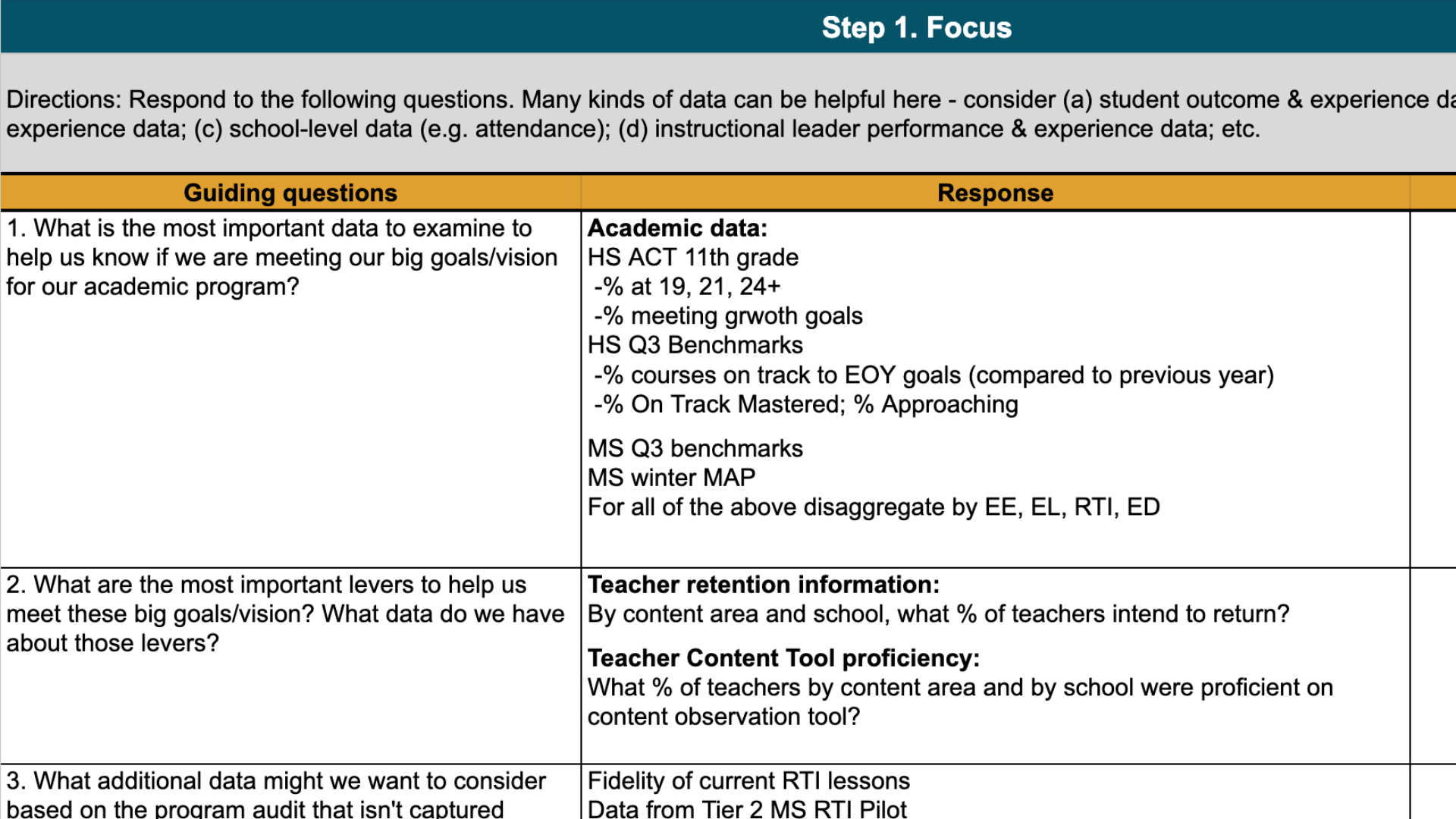
Reflection alone isn’t enough—we also need to pair it with hard data to ensure our insights are rooted in actual student experiences. Once we have a systems audit in place, the next step is to overlay it with academic and operational data.
Some key questions to consider:
- What do student outcomes tell us about program effectiveness?
- How are teacher retention and instructional quality impacting results?
- Are there gaps between what we expect to be happening and what’s actually happening?
I’ve found that stepping back in this way ensures that our plans aren’t just aspirational but deeply informed by what’s really going on in classrooms.
The image below gives a clear picture of what this exercise looks like.
After Auditing, What's Next?
Once you’ve completed the audit and paired it with data, the next step is to turn insights into an actionable roadmap. That means defining priorities and ensuring that any major shifts are backed by both evidence and strategic alignment.
A few guiding principles:
- Don’t rush to solutions. Spend time fully understanding the problem before deciding how to solve it.
- Identify a few major focus areas. Too many initiatives can dilute impact.
- Involve your team in reflection. The best insights often come from those closest to the work.
At the end of this process, we're successful if we've identified 1-3 potential priorities to consider and more deeply explore as we move into the priority planning phase of planning for the next school year.
See the ‘Next Steps’ section of the Academic Program Audit Tool to guide your approach
A Simple First Step
If this process feels overwhelming, start small. Pick one area—perhaps assessment strategies, instructional coaching, or intervention supports—and apply the audit tool there first. Even a focused analysis can yield powerful insights that shape broader academic planning.
Taking the time to step back before diving into next year’s planning isn’t a luxury—it’s a necessity. Our schools and students deserve thoughtful, informed decisions, and that starts with knowing where we truly stand.
About the Author
Meghan Mitchell is the Chief Academic Officer of Valor Collegiate Academies, which serves over 1,900 students across three campuses and consistently ranks in the top 5% of schools in the state for both growth and achievement. With two decades of experience in public education and a deep passion for learning, Meghan leads with a commitment to excellence and equity in education.
This article is an excerpt from one of Seminar’s expert-led workshops, designed to provide actionable insights on key topics for charter school teams. Each session includes practical templates and strategies to help your team thrive. Seminar workshops and all tools mentioned in this post are available exclusively to Seminar Core Members in the Seminar Toolbox.