
Building Safer Schools: 3 Core Principles

We have spent years working with education leaders to ensure students and staff feel safe and supported on our campuses. When it comes to threat assessment and emergency response, we’ve learned—sometimes the hard way—that having robust systems in place is absolutely crucial. That’s exactly what we—Chris Joffe (Founder & CEO, Joffe Emergency Services), Cat Cecere (Managing Director of Learning & Management, Joffe Emergency Services), and Melissa Cassells (COO, KIPP Team and Family Schools)—discussed in a Seminar workshop: “Equitable Threat Assessment Strategies for Safer Schools.”
In this article, we’ll walk you through a few safety leadership principles that we have found critical in ensuring a safe community—particularly how we can prevent, assess, and manage threats in our schools.
1 – Behavioral Threat Assessment & Response
Behavioral Threat Assessment (BTA) is a structured, team-based process that helps schools identify, assess, and manage potential threats before they escalate. Unlike reactive disciplinary measures, BTA focuses on early intervention by evaluating the context of concerning behaviors and determining the appropriate response.
Think of BTA as a way to separate real threats from troubling behavior that may need support rather than punishment. Not every alarming statement or action means a student intends harm, but dismissing concerns without a structured process can be just as dangerous. A well-implemented BTA process removes the guesswork and helps school leaders make informed decisions.
How Behavioral Threat Assessments Work:
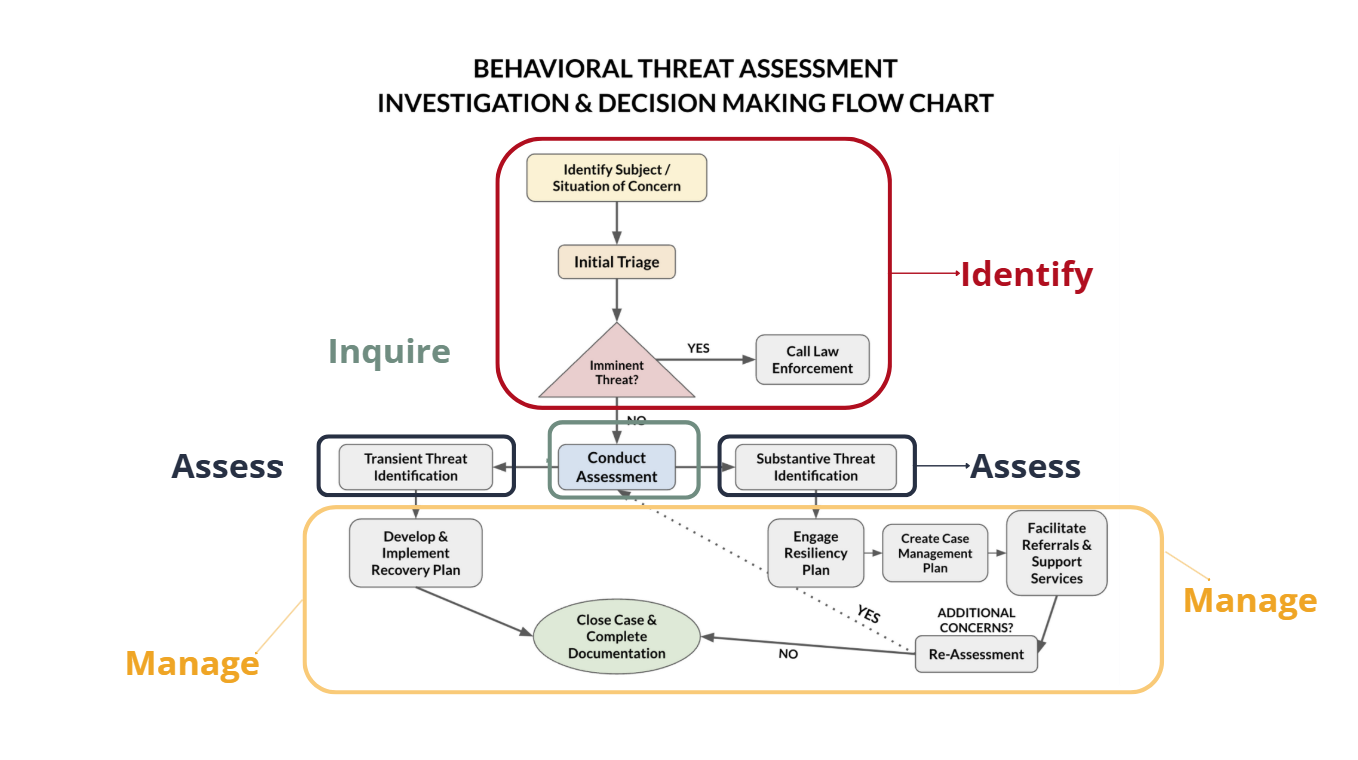
The process typically follows these key steps:
- Identifying a Threat: A concern is raised—whether from a student report, social media post, or observed behavior—that suggests a potential risk.
- Screening for Immediacy: The school determines whether the threat is imminent and whether immediate action (such as law enforcement involvement) is required.
- Gathering Information: A multidisciplinary team collects relevant data, including student history, academic records, social interactions, and input from teachers or counselors.
- Assessing the Threat Level: The team categorizes the risk as low, medium, high, or imminent based on patterns, intent, and capacity for harm.
- Implementing a Response: Depending on the threat level, responses may include increased supervision, student interventions, mental health support, or law enforcement coordination.
- Monitoring & Follow-Up: The school continues to track the situation, ensuring that interventions are effective and that the student’s behavior does not escalate.
Schools that formalize a Behavioral Threat Assessment Program create a structured way to differentiate credible threats from situations that require intervention. When done correctly, this approach balances school safety with student well-being, ensuring students receive the support they need while maintaining a secure environment for everyone.
Relevant: Behavior Threat Assessment - Initial Triage Meeting Template
2 - The 7’s of Emergency Response

During a crisis, time is the most valuable resource. The 7’s of Emergency Response provide a structured approach to guide decision-making and ensure a well-coordinated response at every stage of an emergency.
First 7 Seconds: A split-second decision must be made—whether to drop and cover, initiate a lockdown, or alert authorities.
First 7 Minutes: School leaders must swiftly organize their teams, confirm law enforcement involvement, and provide initial guidance. These early moments set the tone for an effective crisis response.
First 7 Hours: This period focuses on ensuring reunification, managing emergency responders, and controlling misinformation to prevent unnecessary panic.
Knowing when and how to respond is critical to mitigating threats. While immediate responses are the most crucial in shaping outcomes, certain incidents may require ongoing management that extends into days, weeks, months, or even years. Schools must recognize that safety isn’t just about the moment of crisis but also about long-term recovery, policy refinement, and continued support for students and staff. The more immediate responses are handled effectively, the better positioned a school is to manage the extended impacts of a crisis.
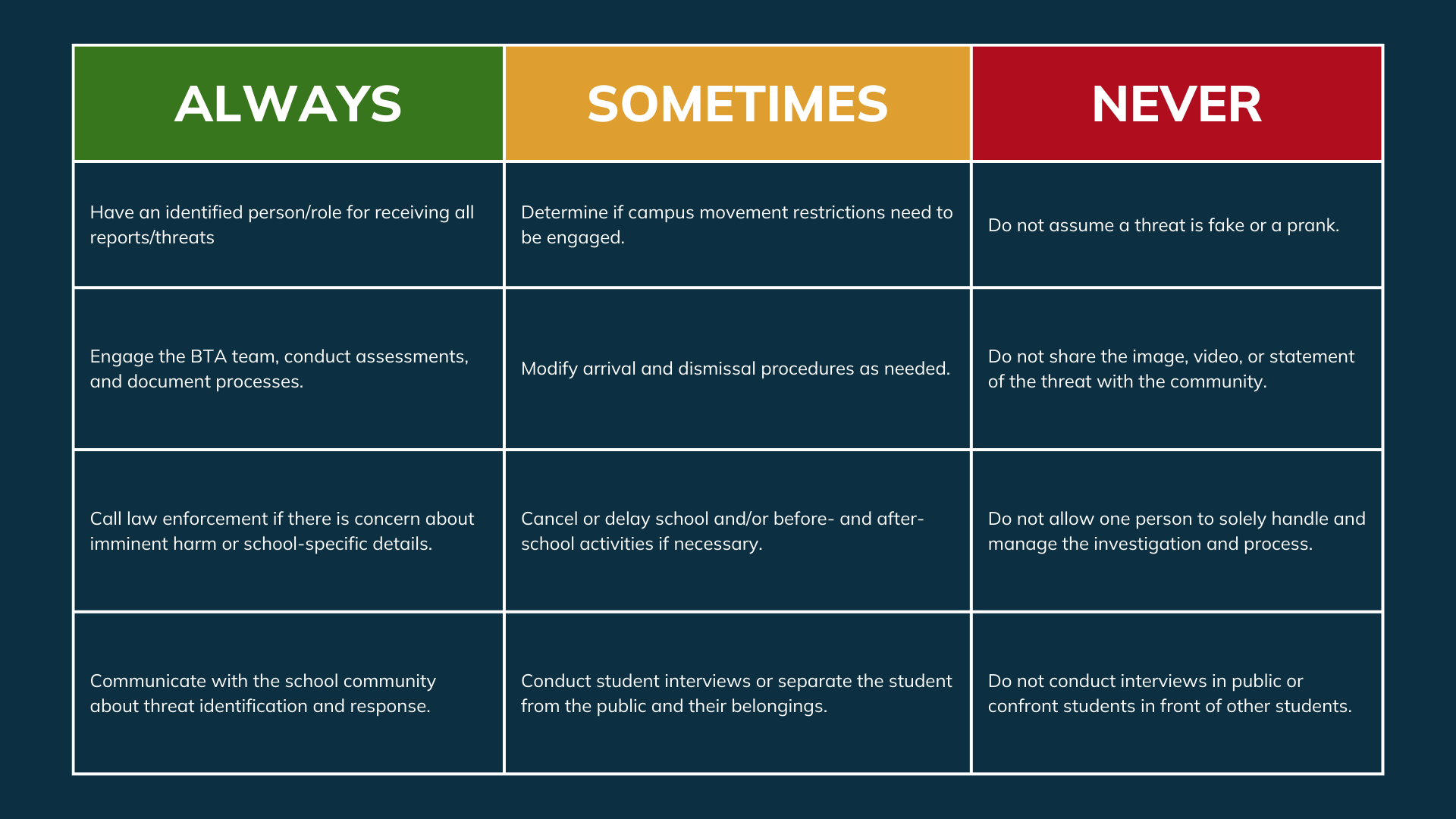
3 – What Should We Always, Sometimes, and Never Do?
When responding to or assessing potential threats, it’s important to have clear guidelines on actions that should always be taken, those that depend on the situation, and those that should be avoided altogether. School leaders can establish their own guidelines, but here are some general recommendations on what to always, sometimes, and never do in the event of an imminent threat.
Final Thoughts
Creating safer schools goes beyond a single action or policy. It is an ongoing commitment to preparedness, communication, and equity in threat assessment. The strategies discussed here—from behavioral threat assessments to the Rule of 7s—provide school leaders with a proactive framework to identify risks and respond effectively.
Ultimately, leadership makes the difference. The way school leaders communicate during a crisis, train their teams, and engage their school communities directly impacts the success of school safety initiatives. It’s not enough to have plans on paper—leaders must practice, refine, and continuously improve their approach to safety.
Emergencies are unpredictable, but preparedness is within our control.
Additional Resources
For further reading on best practices in school safety, explore these resources:
- Strengthening School Safety: Lessons Learned from Cybersecurity Research
- The Power of Words: Crafting Effective Crisis Communication
- Strengthening School Safety: Lessons from a Recent Thwarted Attack
About the Authors
Chris Joffe is the CEO of Joffe Emergency Services, leading efforts to enhance school safety and emergency preparedness. Under his leadership, Joffe has become a trusted partner for schools and organizations nationwide, providing crisis response training and health services.
Cat Cecere is the Managing Director of Learning and Management at Joffe Emergency Services, where she drives training initiatives that equip schools with essential safety and emergency response skills. Her work ensures that educators and staff are prepared to protect their communities.
Melissa Cassells serves as the Chief Operating Officer at KIPP Team and Family Schools, where she oversees operations and strategic initiatives that support student success. With a strong background in education leadership and school operations, Melissa is dedicated to ensuring that schools run efficiently, equitably, and in service of students, families, and educators.
This article is an excerpt from one of Seminar’s expert-led workshops. Seminar workshops provide actionable insights on the topics most relevant to charter school teams. Each workshop is crafted to offer practical templates and strategies, empowering you and your team with knowledge to thrive. Seminar workshops are available to Seminar Core Members.