
Mid-Year Calibration: 3 Practical Ways to Refocus Your Team for Success

Let’s cut to the chase. You’ve got six months left in the academic year, and your team is either sprinting toward the finish line or limping there. I’ve been in both scenarios, and I learned early that routine calibration is usually the difference between a team that survives and one that thrives.
Here’s the truth: Your team needs feedback. But they don’t want platitudes. They need clarity, direction, and a leader who’s willing to roll up their sleeves. In this article, I’ll walk you through some of the strategies I’ve used to do this at scale in KIPP Texas Public Schools—overseeing over 15 departments for the 59-school network—and at IDEA Public Schools, expanding the network from 12 to 120 schools.
Before anything else, pause, take a step back, reflect, and set goals. This is your opportunity to think through the semester ahead, decide what milestones are important for your team, who will take point on major initiatives, and gauge whether each person is positioned for success. I recommend scheduling a short “self-reflection” meeting (on your own or with a teammate for added objectivity) to identify your goals for the semester and determine who will be leading them. If you spot any gaps in skills or capacity, note them right away. Then craft a plan to address those gaps so you can start the semester strong and keep everyone aligned on a shared vision of outstanding execution.
See: 4-Step Goal-Setting Framework for School Leaders by Meghan Mitchell, CAO, Valor Collegiate Academies
Use the 9-Cell Matrix to Put the Right People in the Right Roles
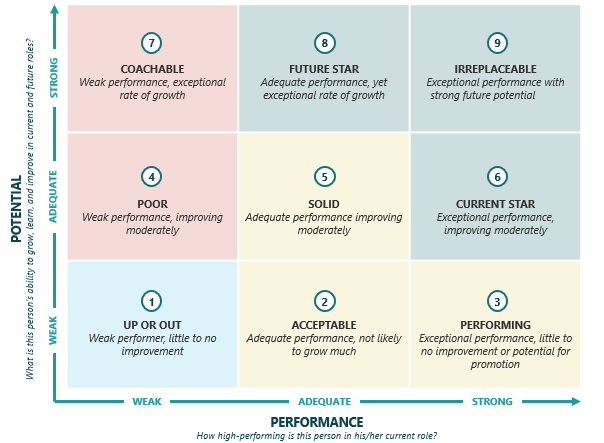
Source: Charter School Growth Fund
For your organization’s sake, you need to put the right people in the right roles—especially when deciding who owns key milestones this semester. The 9-Cell Talent Matrix is a practical tool to help you do just that. It allows you to assess your team through a balanced lens of both performance and potential, ensuring that decisions aren’t based on gut feeling alone.
By mapping out where each team member falls, you gain clarity on who is ready for stretch projects, who needs targeted coaching, and who may not be a fit for their current responsibilities. More importantly, this framework fosters objective, data-driven discussions with your leadership peers—helping to avoid personal bias and ensuring assessments are accurate and actionable.
Once you’ve categorized your team, the next step is clear: stretch your “Strong” performers with high-impact responsibilities, coach your “Adequate” players toward greater growth, and address performance concerns for those who remain “Weak.”
With a clearer understanding of your team's strengths and weaknesses, it’s essential to facilitate open communication through effective feedback methods. We’ll discuss these next!
Use the 2x2 Manager-Direct Report Feedback Approach.
People see right through the classic compliment-criticism-compliment sandwich. Even though it can be a decent feedback tactic, you need a more holistic approach during long-term planning. One approach I’ve found effective is the 2x2 Feedback Approach, which keeps performance conversations clear, actionable, and mutually beneficial.
Here, each manager and direct report brings two strengths and two areas for growth to the table, then they have a focused discussion on what’s working, what needs improvement, and how to move forward. Yes, the direct report also prepares feedback for the manager. It’s equally important to invite feedback on your leadership. No matter how seasoned you are, there’s always room to improve.
See: Evaluation Tools: The 9-Cell Matrix & 2x2 in the Seminar Toolbox
Host Team Planning Sessions
While individual feedback is crucial, a collective conversation can bring everything into focus. In a team planning session, everyone sees the big picture, understands what milestones the team is working toward, and might even discover potential owners (who you may not have figured out by yourself).
Start by clarifying where you stand as an organization or team, where you need to be by the end of the semester, and then brainstorm with the team to figure out what needs to be true to meet your organizational milestones.
Whether you’re using sticky notes on a giant whiteboard or collaborative digital tools, team planning sessions build shared ownership and a clear sense of purpose. When people see exactly how their work contributes to broader goals, motivation—and results—tend to soar.
As you may have noticed, all of these strategies mentioned above have been grounded in providing clarity for your team, while addressing any gaps to help your organization thrive. I’ve witnessed the jitters (and occasional dread) that come when people hear “performance feedback.” It doesn’t have to be painful—or personal. Ground your conversations in concrete data and observable behaviors, and balance every piece of corrective input with clear next steps and genuine encouragement. If you want to delve deeper into the nuances of receiving feedback, I highly recommend the book Thanks for the Feedback. It offers practical strategies for navigating criticisms.
About the Authors
Vanessa Barry served as the Chief Operating Officer for KIPP Texas Public Schools, overseeing over 15 departments for the 59-school network. Prior to KIPP, she led IDEA Public Schools through exponential growth, expanding from 12 to 120 schools over 10 years, and pioneered marketing, enrollment, and community entry approaches now used nationwide.
This article is an excerpt from one of Seminar’s expert-led workshops. Seminar workshops provide actionable insights on the topics most relevant to charter school teams. Each workshop is crafted to offer practical templates and strategies, empowering you and your team with knowledge to thrive. Seminar workshops are available to Seminar Core Members.