
Tackling Post-Pandemic Absenteeism: What Worked at Caliber

As education leaders, we all faced unprecedented challenges when students returned to in-person learning after the pandemic. At Caliber Public Schools, we watched our attendance metrics plummet, mirroring the nationwide trend. It became clear that if we wanted to address learning recovery, we first needed to solve a more fundamental problem: getting our students back in the classroom consistently.
When our board challenged us to identify the "one thing" we needed to get right, our leadership team made a difficult but necessary decision. We temporarily put learning recovery on the back burner to focus entirely on attendance. This single-minded focus allowed us to develop targeted strategies that ultimately transformed our attendance culture.
Before the pandemic, Caliber maintained about a 95% average daily attendance (ADA). Like many schools, our first year back in person saw a significant decline. We had to rebuild attendance habits from the ground up.
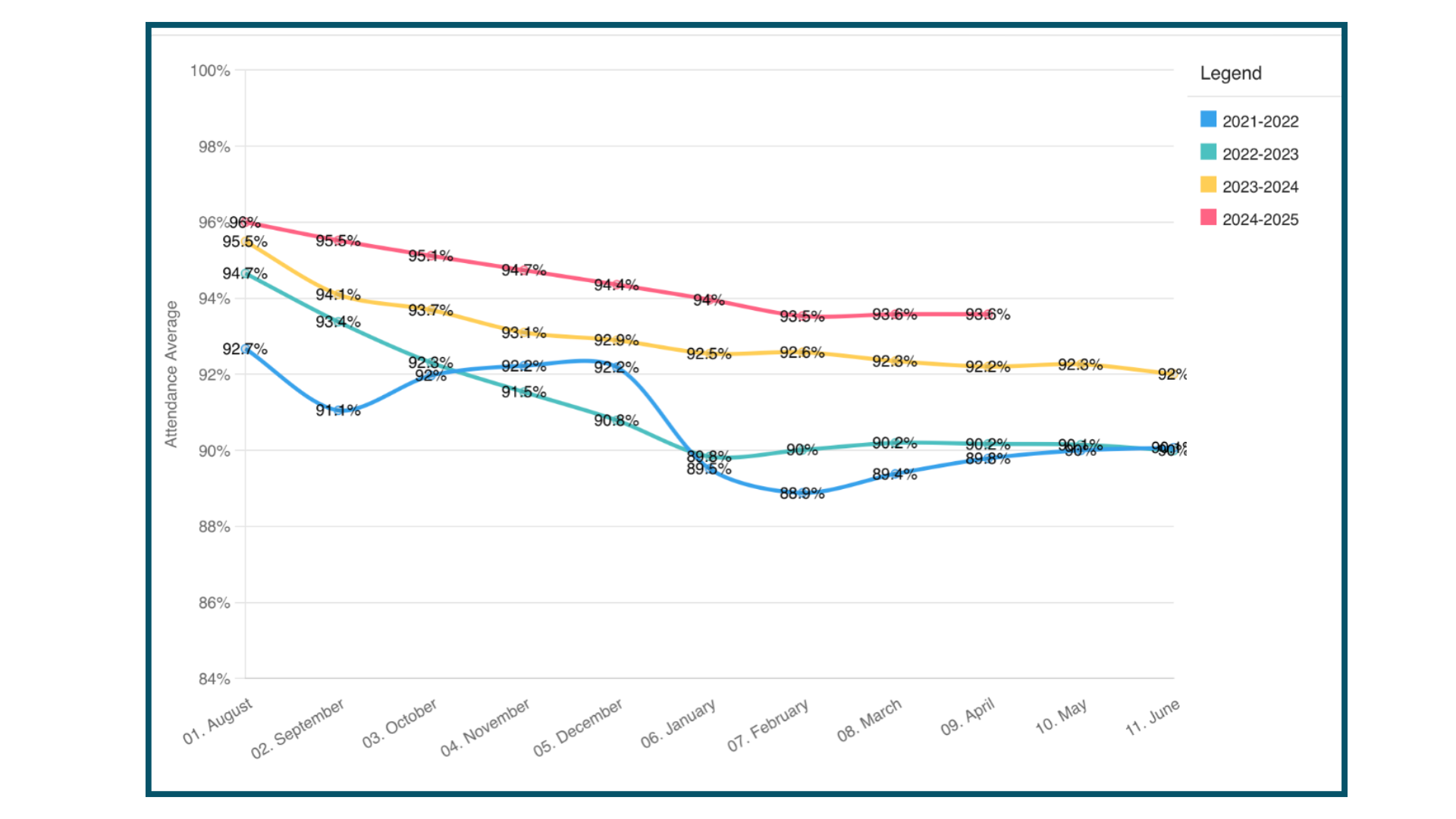
What made this challenge particularly urgent was that both our chronic absenteeism rates and average daily attendance were trending in the wrong direction in 2023. We knew we needed a systematic approach rather than disconnected interventions.
Strategic Approach to Attendance
Rather than simply implementing random interventions, we applied the Influencer Model framework to drive lasting change. This model identifies six sources of influence that, when used together, create powerful behavioral change:
- Personal motivation and ability
- Social motivation and ability
- Structural motivation and ability
A key insight from this framework is that you need at least four out of the six sources of influence to make lasting change. At Caliber, we strategically implemented four high-impact sources that transformed our attendance culture.
Our goal was to influence specific vital behaviors across five key groups:
- Families: Get students to school every day, on time
- Students: Get to school every day, on time; encourage parents to get them to school
- Front Office Staff: Track attendance with accuracy and timeliness; communicate proactively
- Teachers & Staff: Follow up on absences with personal phone calls; encourage attendance; respond to Attendance Coordinator leadership
- School Leadership: Prioritize attendance tracking, response, and messaging
Creating a Culture of Attendance: Our Key Strategies
1. Changing the Environment
We hired dedicated Attendance Engagement Coordinators at each campus – people who woke up every day thinking about nothing but attendance. Having someone who "owned" this metric made all the difference. Before this change, it was frustrating to review declining attendance numbers without anyone clearly responsible for improvement.
Visual cues throughout our schools reinforced the importance of attendance. Daily metrics were posted in lobbies and shared in emails, creating transparency and accountability. These environmental changes cleared the way for attendance to become our top organizational priority.
2. Finding Strength in Numbers: The SWAAT Team
We established what we called "Student Wellness And Attendance Teams" (SWAAT) at each campus. These cross-functional teams included:
- School leaders
- Counselors
- Office staff
- Teachers
- Operations leaders
The SWAAT teams met monthly to analyze data, monitor progress, and adjust strategies as needed. Creating dedicated time and space for these meetings signaled our organizational commitment to attendance as our top priority. The team's diverse perspectives ensured we addressed attendance challenges holistically rather than in isolation.
3. Harnessing Peer Pressure and Celebration
We made attendance visible and celebratory. Teachers proudly wore sashes when their classrooms achieved 100% attendance. We organized pizza parties, ice cream socials, and other celebrations to recognize success. These public recognitions created positive peer pressure that motivated both staff and students.
4. Making the Undesirable Desirable: Red Flag Days and Mystery Fridays
We identified attendance patterns that showed which days students were most likely to miss: Mondays, minimum days, and days adjacent to holidays. We transformed these into special occasions:
Red Flag Days: We implemented proactive communication before holidays or long weekends, reinforcing the importance of attendance on these days.
Mystery Fridays: Our minimum days (often Fridays) became "Mystery Fridays" with special activities, celebrations, and team-building events. Soon, students didn't want to miss these days because they were among the most engaging of the week.
The Impact
By prioritizing attendance for a full school year, we saw remarkable results:
- Our ADA steadily improved, approaching pre-pandemic levels
- Chronic absenteeism rates dropped dramatically:
- From 55% in 2023
- To 34% in 2024
- Tracking below 20% this year
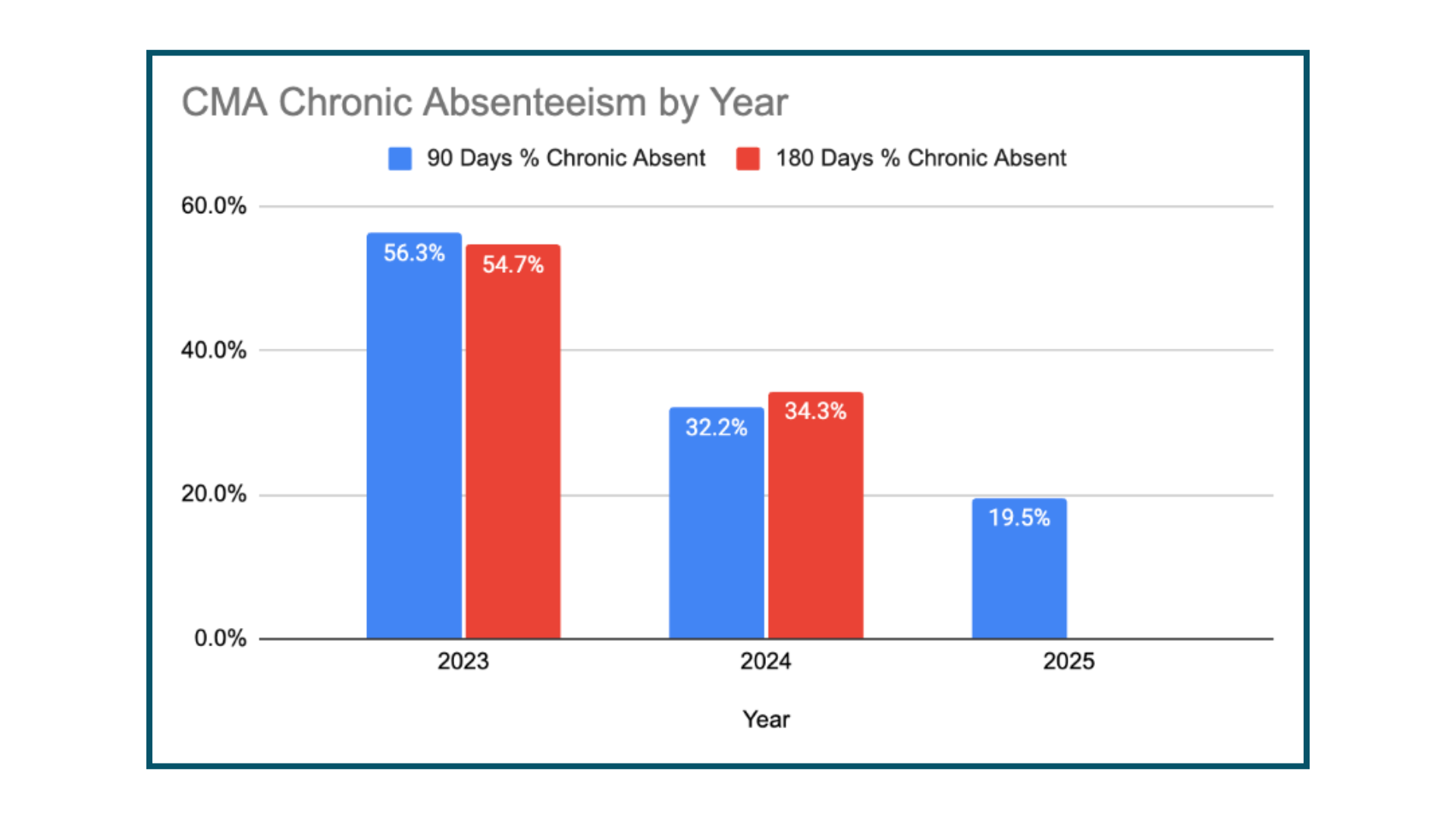
At the mid-year point this year, there were 122 fewer chronically absent students at our school with the highest absenteeism rates compared to the same time last year. Perhaps most importantly, attendance became an organizational vital sign that everyone monitored and valued. Our work changed mindsets about the importance of daily, in-person learning.
Lessons Learned
This journey wasn't without challenges:
Navigating pandemic mindsets required returning to fundamentals about why in-person learning matters. After a year and a half of distance learning, many families had developed different attitudes about school attendance.
Process improvements emerged as we scrutinized our attendance tracking systems. We tightened protocols around taking attendance, tracking data, and communication.
Balancing teacher workload required thoughtful implementation. Adding attendance calls to teachers' responsibilities meant creating time during coaching meetings to make this possible. We also invested in practice sessions so staff felt confident having these conversations with families.
The Path Forward
What began as a crisis response has evolved into a sustainable culture of attendance at Caliber. By using a systematic approach based on the Influencer Model, we've created lasting change in how our community views and prioritizes daily attendance.
For school leaders planning for next year, I encourage you to consider where attendance fits in your priorities. If your post-pandemic numbers haven't fully recovered, perhaps making attendance your "one thing" could be the key to unlocking improvements across all other metrics. Which sources of influence would be most impactful in your context? What resource or strategy do you want to implement first?
Remember, when you focus collectively as an organization on one critical priority, remarkable progress is possible.
About the Authors
Terence Johnson is the CEO of Caliber Public Schools and comes with more than 30 years of experience in all aspects of education. He began his career as a teacher, athletic director, and Principal in Colorado Public Schools, before moving to Houston where he led the turnaround of schools in underserved communities. Terence then moved on to the KIPP Foundation leadership team, where after serving 12 years as Senior Director of Leadership, Terence joined KIPP Memphis as Chief Schools Officer, and eventually returned to Houston as Head of Schools for KIPP Houston.
Katherine Hendrickson is the Chief of Strategy at Caliber Public Schools and has spent the last thirteen years working and learning in excellent public high schools. She began her career at the Denver School of Science and Technology, one of Colorado’s top public high schools for traditionally underserved students. While serving as the Academic Dean at Leadership Public Schools in Richmond, California, the academic program was recognized by US News and World Report to be among the nation’s top 1% of public high schools. 77% of 11th graders met or exceeded standards on the SBAC- ELA, more than doubling the proficiency of neighboring high schools.
This article is an excerpt from one of Seminar’s expert-led workshops. Seminar workshops provide actionable insights on the topics most relevant to charter school teams. Each workshop is crafted to offer practical templates and strategies, empowering you and your team with knowledge to thrive. Seminar workshops are available to Seminar Core Members.