
The Strategy Behind Valor’s Athletics Program, and How It Supports 56% of Enrollment
When I tell education leaders that 56% of our families chose our schools specifically because of athletics, I usually get some raised eyebrows. When I add that we accomplished this without any outdoor facilities, those eyebrows shoot even higher.
But here's what I've learned after five years building Valor Collegiate's athletic program from the ground up: athletics isn't just an add-on to your academic mission. Done right, it becomes a powerful enrollment and retention tool for your school.
The Reality Check: Families Want More Than Academics
Let's start with what we all know but don't always act on. Today's families aren't just shopping for test scores and college acceptance rates. They're looking for the complete experience that develops the whole child. They want character development, leadership opportunities, and a sense of belonging that extends beyond the classroom.
At Valor, we serve 2,200 students across three charter schools, and our data tells a clear story. When we survey families about their school choice, athletics consistently ranks as a major factor for over half of our population. Even more telling: 61% of our incoming families heard about Valor through our volleyball or soccer programs.
Think about that. These are families who don't necessarily have student-athletes yet, but they're already connecting with our school brand through athletic excellence.
People First, Performance Follows
Since we started Valor’s athletic program in 2018, we’ve won 2 state championships, 2 state runner-up titles, 13 state tournament appearances, and became the first public school in Tennessee to earn the National Quality Program Award from the NIAAA.
And we did all that without our own outdoor athletic facilities.
How? Culture.
We made a decision early on that our athletic program wouldn’t just be about performance. It would be about people. Our identity as a department is built on the belief that when you put people first, performance follows.
That means coaches are relationship-builders first. Athletes are treated as whole people. And every single player on the roster — starter or not — feels like they matter.
It also means we approach visibility strategically. Our social media accounts are vibrant, youth-led, and focused on celebrating our teams. Every home game is livestreamed. And our game day operations are run by students. That’s not just logistics. That’s culture-building.
Our student-athletes also maintain a 3.1 department GPA and a 100% graduation rate. The data backs up what we instinctively know: when kids feel valued and supported, they perform better both on the field and in the classroom.
Athletics as Your Front Porch
You've probably heard this phrase before, but let me make it concrete. Your athletic events are often the first impression families have of your school culture, like we saw above. Every volleyball game at Valor draws 300-600 fans. That's 300-600 opportunities to showcase not just athletic excellence, but the character and community that defines our school.
We've made these events completely student-led. Students work concessions, guide officials, escort visiting teams, and run game operations. Why? Because your best ambassadors are your current students and families. They're the ones wearing your gear in the community, talking about your school at work, and sharing their experience with neighbors.
One of our most successful enrollment strategies started accidentally. We began inviting fourth-grade families to big games, blocking off sections for them, bringing out the mascot, and creating halftime activities. These families see our culture in action: the student leadership, the community support, the way we celebrate both effort and achievement.
Be Loud About your Athletics Efforts
Here's a hard truth I learned from losing a basketball player to another school: if you're not telling your story on social media, someone else is telling theirs better. This student chose another program because their Instagram made their opportunities look more exciting, even though the actual opportunities were identical.
We doubled down on our social media budget and strategy. Every sport gets professional media day coverage, complete with dramatic lighting and high-quality photos. Our student-athletes help create content, and we feature them regularly across all platforms.
The investment pays off. Social media has become our primary recruitment tool for reaching both current families and prospective ones. But remember: it’s not just about the budget you have; it’s about the story you tell.
Quick Wins to Implement This Season (If Your Athletics Program Is Already in Full Gear)
Based on our experience, here are immediate changes that can elevate your athletic program's enrollment impact:
Visibility First: Ensure your athletics page is prominently linked on your school website. Post coach bios and photos. Create visible signage around athletic spaces. These seem basic, but they signal that athletics matters at your school.
Student Ambassadors: Involve current students in every aspect of game day operations and open house events. They're your most authentic voices and they take ownership when they're part of the process.
Data Collection: Start tracking how families hear about your school. You might be surprised how many connect through athletic programs, even if their child doesn't play sports.
Live Streaming: Make all home games accessible online. Families want to see your program in action, and this expands your reach beyond your immediate community.
Community Integration: Host athletic field days, invite local elementary classes to games, and create opportunities for prospective families to experience your athletic culture firsthand.
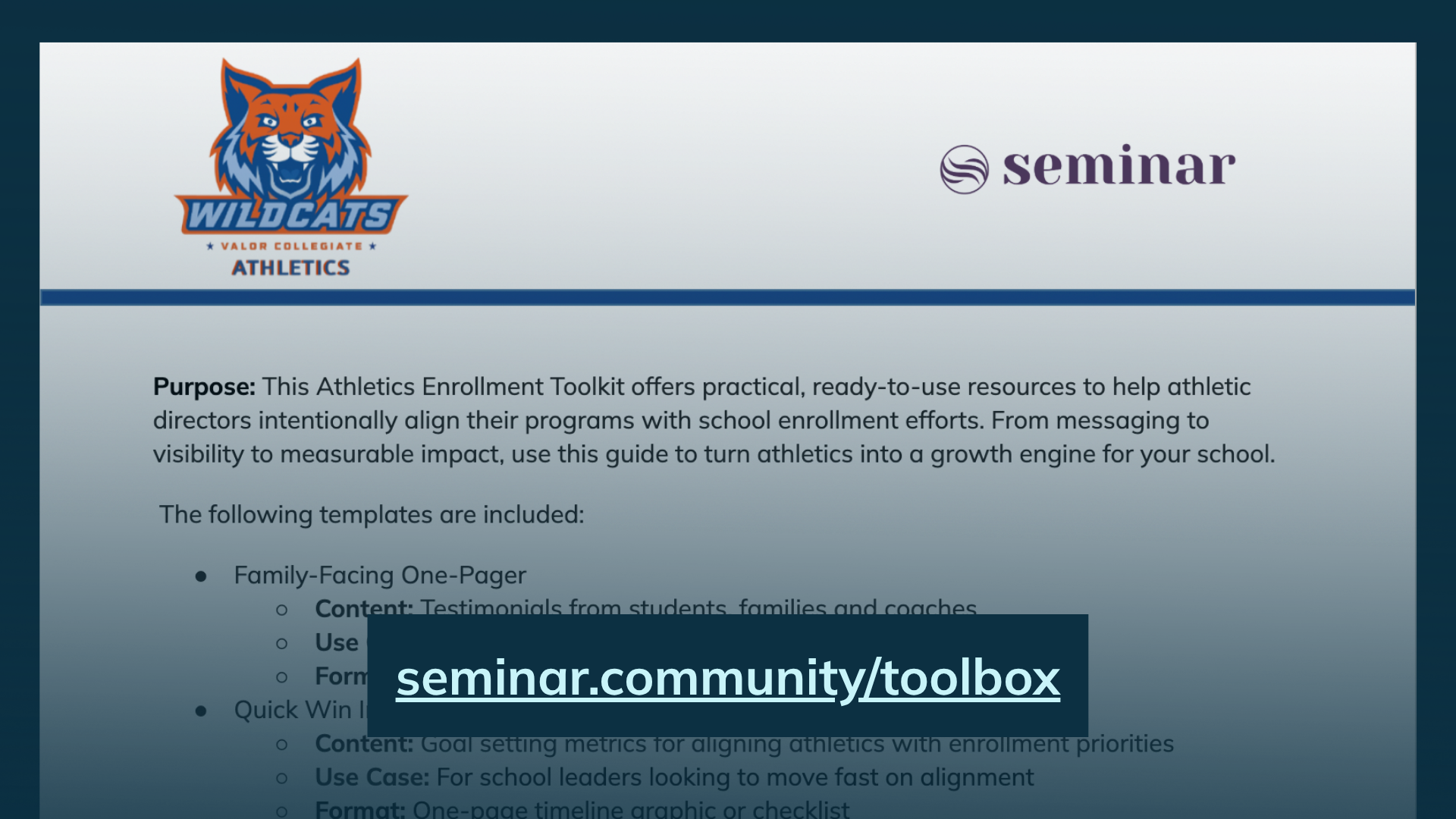
Athletics Enrollment Toolkit in the Seminar Toolbox
I’ve added an Athletics Enrollment Toolkit to the Seminar Toolbox to support you in building a strong, mission-aligned athletics program. Whether your program is already in full swing or just getting started, this tool is designed to set you up for success.
Debunking the Myths
Let me address the pushback you might face:
"We're too small for competitive athletics." Strategy matters more than size. Focus on what you can do well rather than trying to be everything to everyone.
"Athletics distracts from academics." Our student-athletes have a 92% AP test pass rate. They're not distracted; they're engaged.
"Families don't really care about sports." The data says otherwise. Athletics attracts families and keeps them invested in your school community.
The Long Game
Building a strategic athletic program takes time, but the enrollment benefits compound quickly. We've seen our athletic participation grow 40% in three years while maintaining strong academic outcomes. More importantly, we've created a school culture where students want to be, families want to stay, and community members want to support.
Athletics gives you something unique in the charter school landscape: an emotional connection that transcends test scores and college acceptance rates. Families choose schools where their children will thrive, grow, and belong. A strong athletic program communicates all three.
Whether you're starting from scratch or looking to elevate an existing program, remember this: you're not just building teams. You're building community, character, and ultimately, the kind of school experience that families will choose and recommend to others.
The scoreboard will show wins and losses, but your enrollment numbers will show the real impact of athletics done right.
About the Author
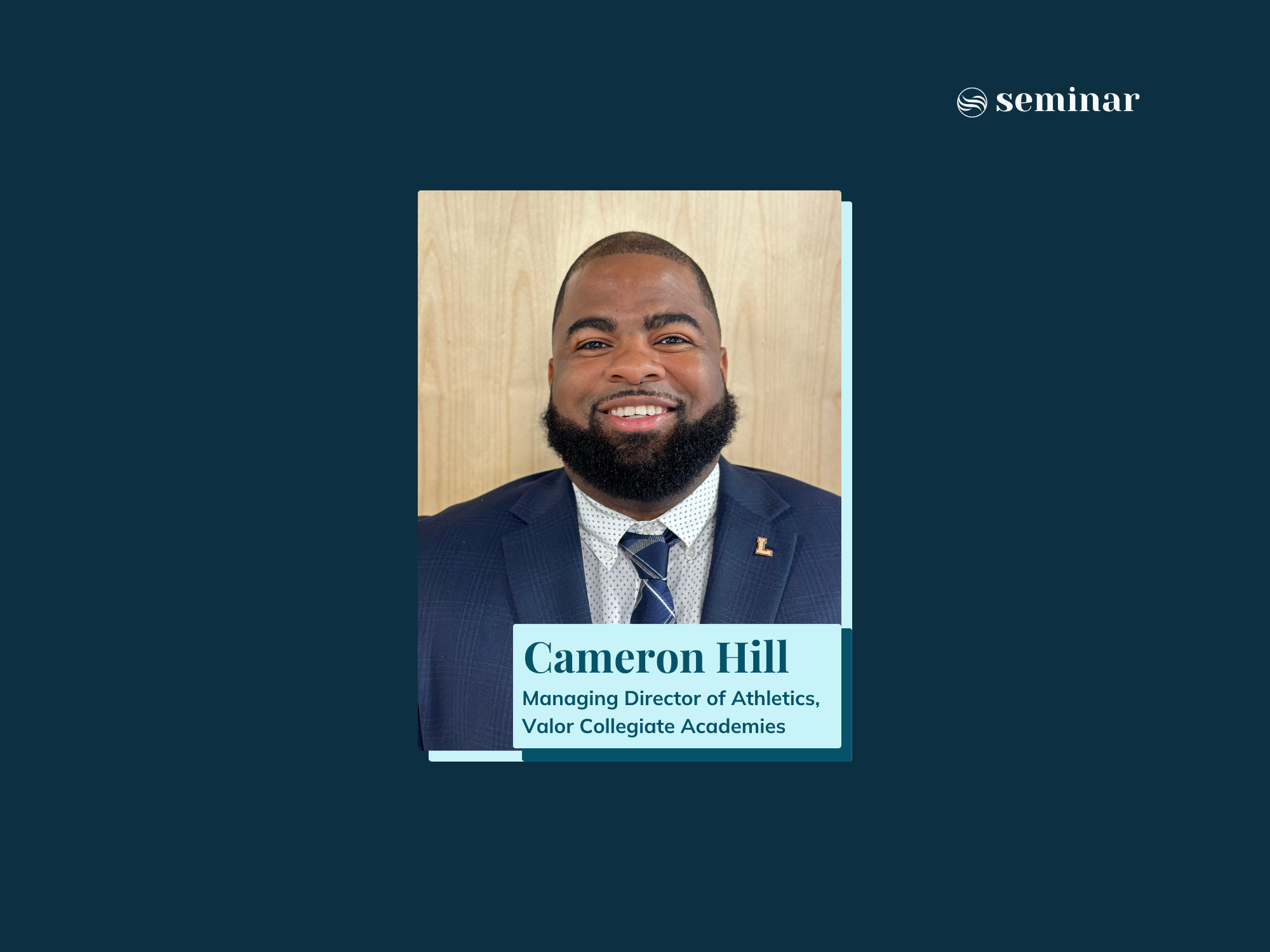
Cameron Hill is the Managing Director of Athletics at Valor Collegiate Academies in Nashville, TN, where he has led one of the nation’s most celebrated public charter school athletic departments. During his tenure, Valor has earned 2 state titles, 4 state championship appearances, 9 regional championships, and 18 district championships, while maintaining a 100% graduation rate among student-athletes. In 2023, his department became the first public school in Tennessee to receive the NIAAA’s National Quality Program Award, recognizing the most distinguished athletic programs in the USA.
This article is an excerpt from one of Seminar’s expert-led workshops, designed to provide actionable insights on key topics for charter school teams. Each session includes practical templates and strategies to help your team thrive. Seminar workshops and all tools mentioned in this post are available in the Seminar Toolbox, which is accessible via Seminar Core.