
Why “College for All” May Not Be Enough—And What We’re Doing About It
If we’ve invested so deeply in preparing students for college, why aren’t the outcomes measuring up?
Each of us–James Cryan, Founder & former CEO of Rocky Mountain Prep; Tricia Noyola, CEO of Rocky Mountain Prep; Chip Linehan, co-CEO & Co-Founder at Building 21–has led or is currently leading school networks that have proudly celebrated college acceptance rates or senior signing days. But we’ve also had to reckon with the reality that many of our alumni are not achieving the long-term outcomes we hoped for. Some are leaving college saddled with debt and no degree. Others are working in jobs that don’t offer sustainable wages or pathways to growth. And nearly all are navigating a postsecondary system that wasn’t built for them.
The “college for all” movement reshaped the education landscape. It raised expectations, challenged inequities, and opened doors for students long shut out of opportunity. But even with those powerful gains, we’re seeing signs that enrollment alone doesn’t always translate into the long-term outcomes our students deserve.
Here’s what the data tell us:
- Many still lack access to college. Just 48% of low-income students attempt college.
- Completion rates remain low. Only 15% of low-income students earn a degree by age 24.
- Costs have skyrocketed. Tuition has grown 19x faster than family income since 1980.
- It doesn’t always pay off. Too often, students walk away with debt, not a degree.
- Students are seeking alternatives. 55% are actively exploring options beyond a traditional four-year path.
These realities invite us to ask: How can we support students in connecting to high quality college programs where they’re most likely to succeed? And how can we support students in finding high-quality professional programs, when that is their preference? If 62% of American adults over the age of 24 do not hold a bachelor’s degree, why do our systems still signal that it’s the only path worth pursuing?
Even the most outcomes-driven charter networks are facing this tension. Across the country, schools see promising college enrollment rates; but a steep drop-off in completion. The numbers tell the story: out of 100 students at the highest performing Charter Management Organizations, 95 graduate, 71 matriculate, but only 38 complete a degree in six years. And that’s the best of the best
As James shared in a session with Seminar leaders, this question—what happens to the other 62%?—is what keeps us up at night. We all believe that every child deserves a path to a life of purpose and opportunity. But too often, our systems provide a plan that seems strong on paper but doesn’t fully deliver in practice.
At Rocky Mountain Prep, Tricia and her team made a fundamental shift. Instead of centering solely on college admissions, they now focus on ensuring each student graduates with a personalized postsecondary plan, meaningful career exposure, and at least one high-quality acceptance—whether that’s to a college, an apprenticeship, or a training program with strong ROI.
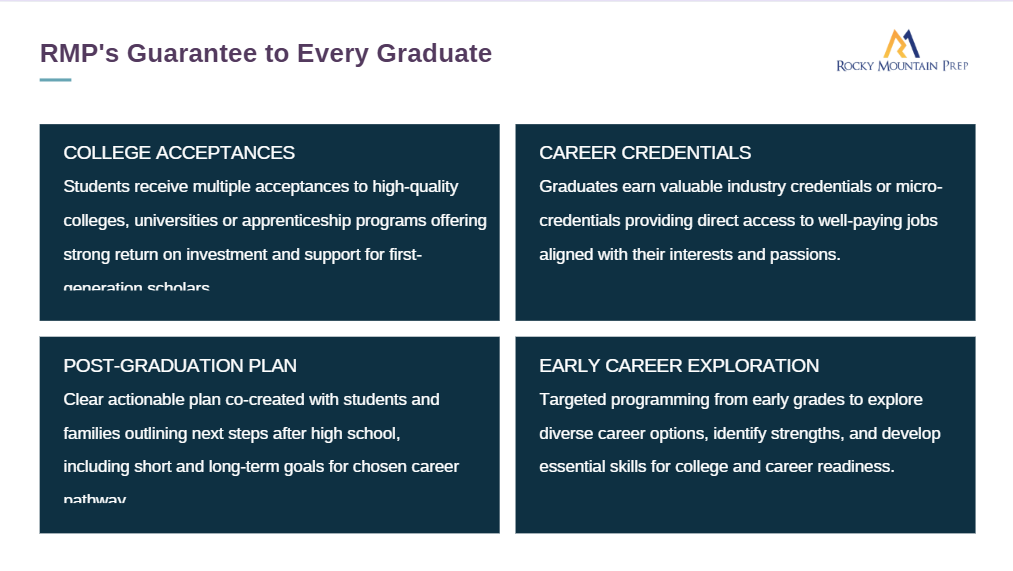
This work didn’t come from theory. It came from looking at alumni data and realizing that many of RMP students were enrolling in colleges with single-digit graduation rates. Some were schools we had actively encouraged them to attend. That was a hard truth to sit with. But it forced RMP to confront the difference between access and outcomes, and to start building systems that do both.
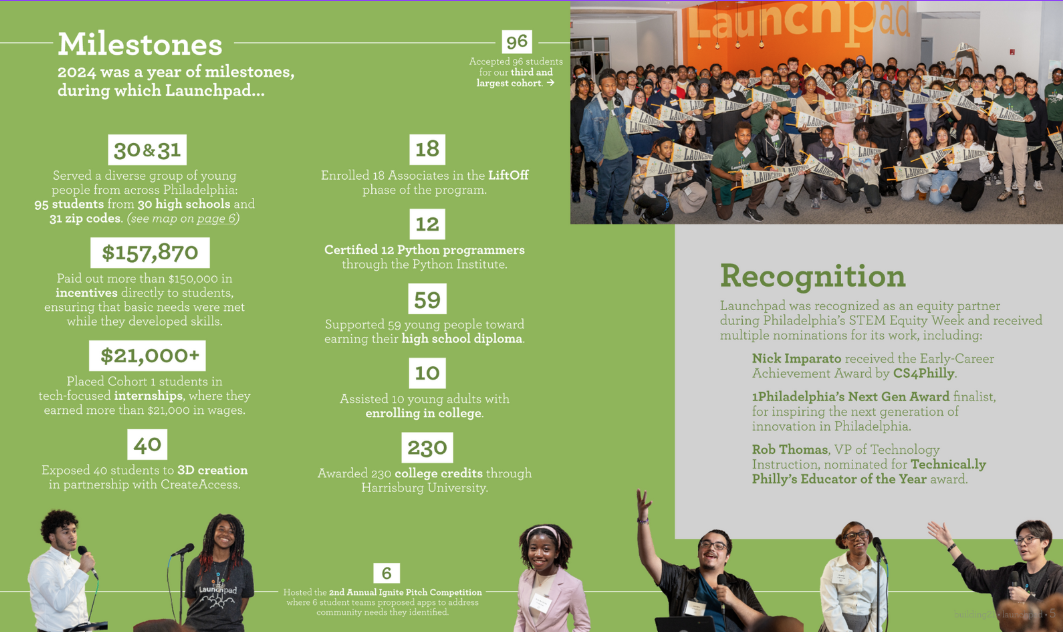
At Launchpad, an initiative of Building 21, Chip and his team are building an accelerated, industry-aligned pathway to economic mobility—starting in high school. Designed for students interested in tech, Launchpad blends rigorous technical training, mentorship, and real-world work experience with personalized support. Students gain industry-recognized certifications, earn college credit, and complete paid internships, all while building the durable skills and professional networks needed to succeed in college or to launch directly into high-wage tech careers.
And here’s the key: this is not viewed as “Plan B.” It’s viewed as a forward-looking model that gives students the agency and information to make the right choice for them; whether that’s college or something else entirely. The early results at Launchpad are promising:
Across both of our networks, the shift has been away from prestige-based planning and toward purpose-based planning. That means:
- Measuring ROI
- Starting career exploration early—well before senior year
- Co-designing postsecondary plans with students and families
- Holding ourselves accountable for long-term outcomes, not just short-term optics
This work is not easy. In fact, the hardest part isn’t the students; it’s the adults. We all carry our own biases and our own definitions of what success “should” look like. But as Tricia noted during the session, if we truly believe in equity, we have to ensure students have access to a full range of real, supported, and valued options.
We’re still learning. But here’s what we know: if we want to serve our students well, we need to design for the lives they want to lead—not just the ones we once assumed for them.
We hope this conversation doesn’t stop here. We invite you to reflect on your own data, revisit the advice your teams are giving, and join us in reimagining what postsecondary success can—and should—look like.
About the Authors
James Cryan is the founder and CEO of Willow Education, a purpose-driven career exploration and planning curriculum and platform. Formerly, he was the founder and former CEO of Rocky Mountain Prep, a high-performing network of charter schools in Colorado serving approximately 5,000 scholars. Under James’s leadership, the schools were recognized among the top-performing in the state and honored as one of Denver's Top 100 Workplaces. Driven by the belief that all students deserve an exceptional public education, James has dedicated his career to providing a rigorous and loving educational environment where every child can reach their full potential.
Tricia Noyola is the CEO of Rocky Mountain Prep. A native of the Rio Grande Valley in deep South Texas, Tricia brings a lifelong commitment to educational equity, with a deep personal connection to immigrant communities and the transformative power of high-quality education. As CEO of RMP, Tricia led Colorado’s first charter network merger, delivering unprecedented success. Today, RMP is the highest-rated school district in the greater Denver metro area, with students consistently outperforming city and state growth benchmarks. Prior to joining RMP, Tricia spent a decade at IDEA Public Schools, one of the nation's most successful charter networks, where she played a pivotal role in expanding IDEA’s impact. Beyond her work in education, Tricia is a fierce advocate for children and families in the foster care system and a devoted mother to four incredible kids.
Chip Linehan is the Co-Founder and currently serves as Co-CEO of Building 21, a national education and workforce development non-profit that partners with communities, families, students, educators, and school districts to build learner-centered pathways so all young people can have the future they want. Chip is also the Founder of Building 21’s most recent initiative, Launchpad, which is a “learn-and-earn” workforce development program that prepares students from traditionally underrepresented groups for high paying careers in tech. Prior to Building 21, Chip spent 20 years at New Enterprise Associates, the largest venture capital firm in the world.
This article is an excerpt from one of Seminar’s expert-led workshops. Seminar workshops provide actionable insights on the topics most relevant to charter school teams. Each workshop is crafted to offer practical templates and strategies, empowering you and your team with the knowledge to thrive. Seminar workshops are available to Seminar Core Members.