
Are We Equipping Students for What Comes Next After Graduation?
As educators, we’ve long known that students thrive when they have both purpose and direction. What’s striking is how consistent the research has become: students who develop a strong sense of purpose—who can name their strengths, see a future for themselves, and feel connected to that path—don’t just feel more motivated. They attend school more regularly, maintain higher GPAs, persist in higher education, and report better mental health outcomes.
Yet, we also know the sobering side of the story. Postsecondary education matters more than ever, but access and completion remain unequal. According to the Colorado Talent Pipeline Report (2023), 76% of top jobs in the state require postsecondary education. At the same time, nearly 50% of low-income students who start college won’t complete it, reports Pell Institute. That means too many students carry debt without the benefit of a degree. Add to this that more than $300 billion in debt is held by 40 million Americans who pursued but didn’t finish a degree.
And while skepticism toward higher ed is growing, three out of four students say they want more career exploration support in high school. This is the gap our schools are uniquely positioned to fill.
Why Purpose Development Belongs at the Center
Purpose is not “extra.” It’s foundational. Students who develop a clear sense of purpose are more likely to achieve higher GPAs, attend school consistently, and persist through college. Purpose turns the school day from a sequence of disconnected periods into a narrative that feels worth investing in.
The updated CSGF alumni research, which looked at over 2,600 alumni across charter networks, reinforces this. The study shows that GPA levels strongly predict outcomes: students at or above a 3.5 GPA are significantly more likely to thrive in postsecondary education and beyond. At Rocky Mountain Prep, we set our internal GPA goal at 3.3 because of how clearly it correlates with opportunity—and the data confirms it’s worth holding that line.
The Role of AI in Purpose Development
What’s new (and what excites me most) is how artificial intelligence is expanding the tools at our disposal. Traditional career interest surveys, like the old RIASEC model, provided some direction, but AI can generate sharper predictions, faster feedback, and more engaging experiences.
At Uncommon Schools, Mike Taubman has led a “Summit” program where seniors use AI not just to explore careers but to critically examine how AI will shape their chosen fields. Students debate real-world memos—like Shopify’s statement that “no one will be hired unless the job can’t be done with AI”—and then use AI to test how their own career interests might be impacted. This turns AI from a distant buzzword into a lived conversation about agency, choice, and the future of work.
The point isn’t the technology itself—it’s how it allows students to connect reflection, exploration, and action.
Making Purpose Real in Schools
The challenge, of course, is always time. Schools can’t add a new program without trade-offs. But what we’ve learned is that purpose development doesn’t have to be siloed. It can run through advisory, career seminars, or dedicated junior and senior programming. It can also show up in lighter-touch ways earlier, planting seeds in middle school that grow into serious exploration by high school.
From our work with schools across the country, we’ve seen a few design principles make the difference:
- Start small, then scale. One pilot with six students can grow into a system-wide approach. Don’t wait for the perfect design; learn by doing.
- Integrate reflection. Physical journals, structured prompts, and opportunities to revisit past reflections help students see growth over time.
- Pair exploration with action. If a student says they want to be a journalist, give them the chance to write, report, and publish, even if it’s just to their peers.
- Connect students to real professionals. Teenagers are remarkable networkers when given the opportunity. With support, they will reach out, schedule calls, and build connections that expand their sense of what’s possible.
A Call to Leaders
Supporting students in discovering their strengths and purpose isn’t a luxury—it’s central to preparing them for life after graduation. The combination of AI tools and high-quality curriculum gives us a new opportunity to weave this work into our schools in a way that is rigorous, scalable, and deeply meaningful.
Every school system will approach it differently, but the charge is the same:
- Build a strategy for purpose development.
- Create meaningful career exploration opportunities.
- Ensure students have quality postsecondary plans that go beyond “college for all” and include strong apprenticeships, certifications, or other pathways with real ROI.
- Prepare students with the literacies—including AI literacy—they’ll need to thrive as adults.
If we do this well, we won’t just help students get into college or land a first job. We’ll help them build lives that are purposeful, resilient, and full of opportunity.
About the Authors
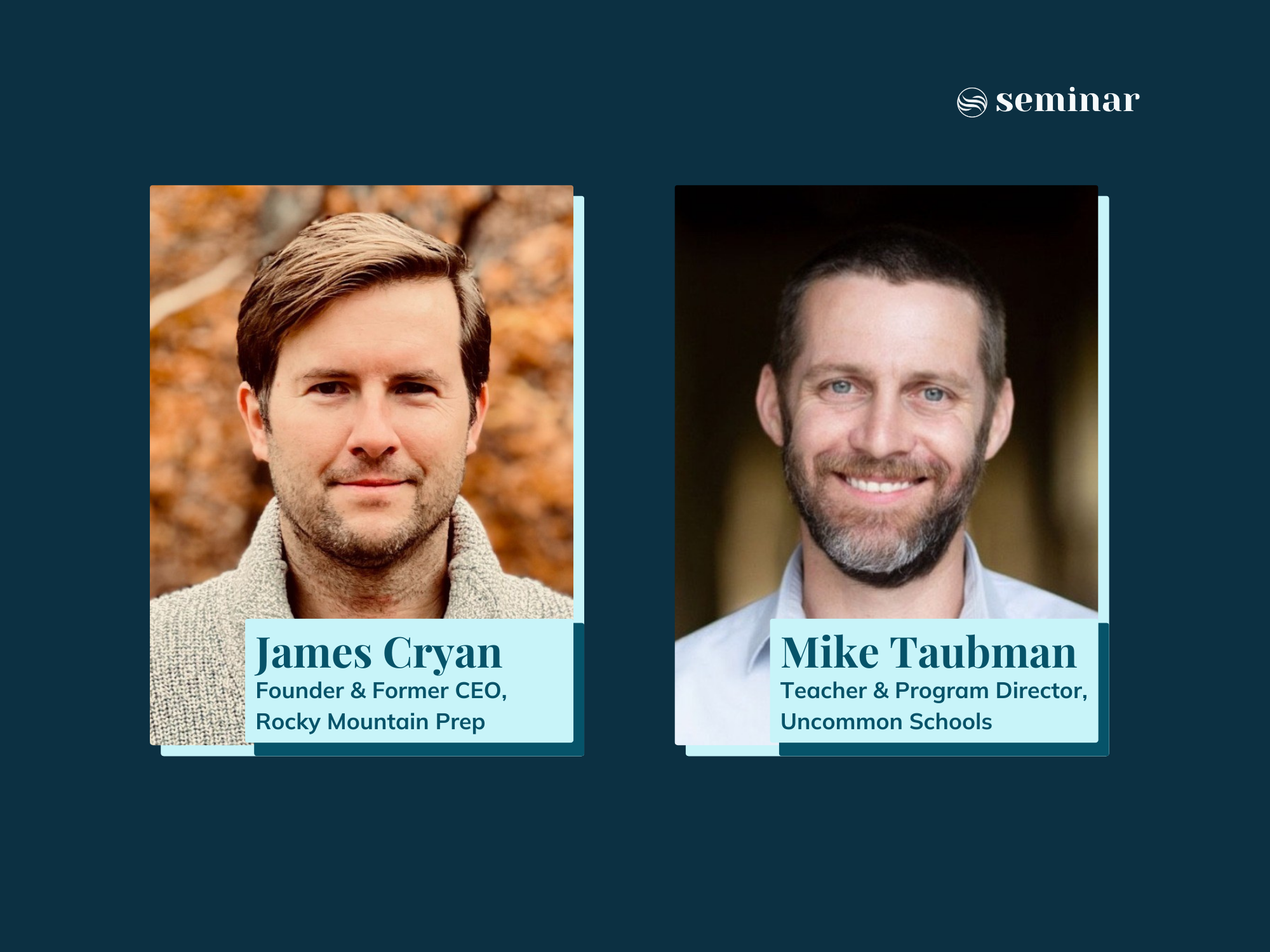
James Cryan is the founder and CEO of Willow Education, a purpose-driven career exploration and planning curriculum and platform. Formerly, he was the founder and former CEO of Rocky Mountain Prep, a high-performing network of charter schools in Colorado serving approximately 5,000 scholars. Under James’s leadership, RMP schools were recognized among the top-performing in the state and honored as one of Denver's Top 100 Workplaces. James has dedicated his career to giving all young people the opportunity to realize their full potential.
Mike Taubman is a lifelong educator who designs and teaches at the intersection of AI literacy, career-connected learning, purpose development, and moral inquiry — all to empower high school students to flourish in our rapidly evolving world.His work has been featured in The Washington Post, Chalkbeat, and leading education texts including "Leverage Leadership", "Teach Like a Champion", and "Love and Literacy", as well as books by prominent education researchers. Since 2005, he's served as a teacher, instructional leader, and program director at North Star Academy / Uncommon Schools, where he currently designs and directs the Summit Program, an innovative career and purpose exploration initiative for juniors and seniors. As a Stanford Digital Education Fellow since 2022, he also supports Stanford’s work bringing credit-bearing, hybrid courses to students in Title I high schools nationwide, as well as helping to develop and pilot cutting-edge high school AI curricula.
This article is an excerpt from one of Seminar’s expert-led workshops. Seminar workshops provide actionable insights on the topics most relevant to charter school teams. Each workshop is crafted to offer practical templates and strategies, empowering you and your team with knowledge to thrive. Seminar workshops are available to Seminar Core Members.